
Compatible vs Original Printer Ink: What's the Difference?
Published by Go Inks on 17th Sep 2026
When it's time to replace your printer ink, you may notice that you have two main options: an original cartridge made by your printer manufacturer, or a compatible cartridge made by another company.
But what's actually the difference between compatible and original printer ink? Is compatible ink safe to use? Will it affect print quality? And is paying more for an original cartridge worth it?
The answer depends on your printer, what you print and the particular cartridge you are buying.
In this guide, we'll explain the differences between original and compatible ink cartridges, how they compare on price and performance, what to check before buying and why choosing a reputable supplier matters.
What Is Original Printer Ink?
Original printer ink is an ink cartridge manufactured or supplied by the same brand that makes your printer.
For example:
-
Canon printer → Canon original ink
-
Epson printer → Epson original ink
-
Brother printer → Brother original ink
-
HP printer → HP original ink
You may also see original cartridges described as genuine, OEM or manufacturer cartridges.
Original cartridges are developed for the manufacturer's printer systems. Printer manufacturers such as Epson emphasise that their genuine inks are researched, developed and tested specifically for their printers.
This gives you a straightforward purchasing route: identify your printer, select the manufacturer's cartridge and install it.
The main disadvantage is usually the purchase price. Original cartridges can cost considerably more than compatible alternatives, particularly if you print regularly.
What Are Compatible Ink Cartridges?
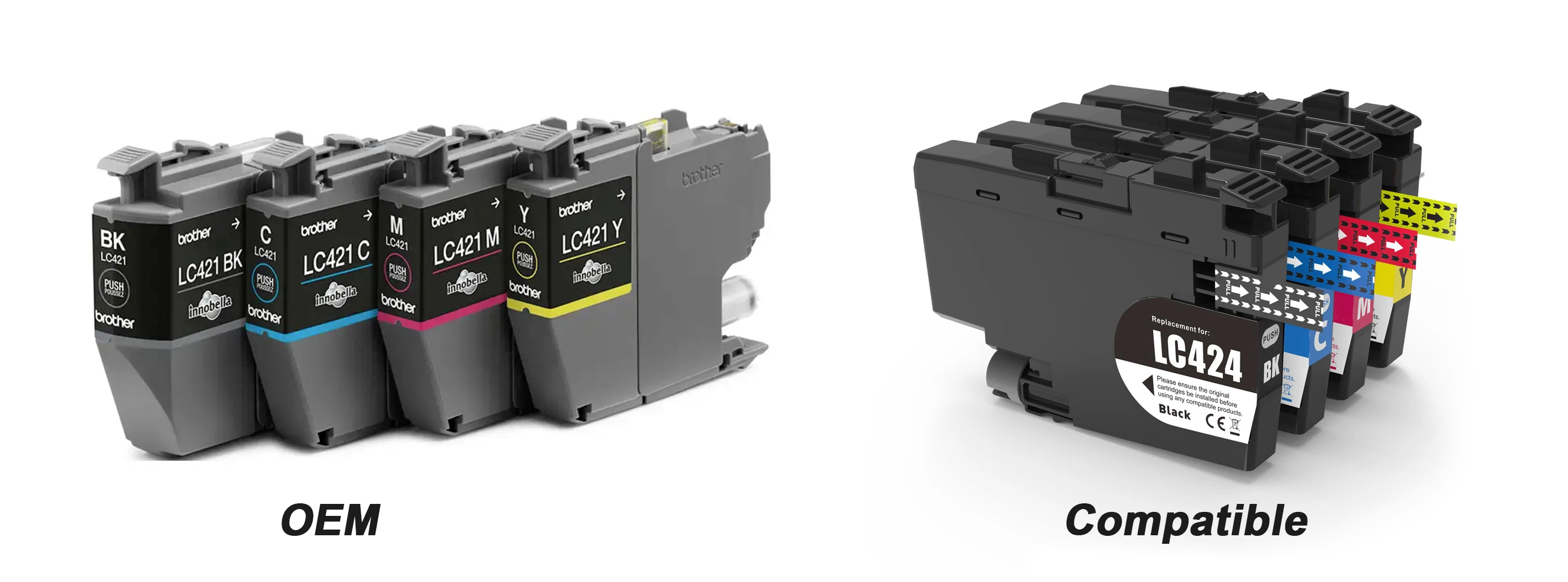
Compatible ink cartridges are cartridges produced by a third-party manufacturer rather than the company that made your printer.
They are designed to work with specific printer models and cartridge references.
A compatible cartridge is not the same thing as a counterfeit cartridge.
A properly sold compatible cartridge should clearly identify itself as a compatible or non-OEM product. It should not be presented as an original Canon, Epson, Brother or HP cartridge.
For example, a compatible cartridge may be designed to replace an original cartridge such as:
-
Canon PGI-550 or CLI-551
-
Epson 603 or 603XL
-
HP 364 or 364XL
The important point is that the compatible cartridge needs to be designed for the correct printer and cartridge reference.
Compatible vs Original Ink at a Glance
| Original ink | Compatible ink | |
|---|---|---|
| Made by | Printer manufacturer | Third-party manufacturer |
| Designed for | Manufacturer's printers | Specific compatible printer models |
| Price | Usually higher | Usually lower |
| Printer compatibility | Designed by the printer manufacturer | Must be checked carefully |
| Print performance | Manufacturer-tested | Depends on the cartridge and supplier |
| Colour consistency | Manufacturer's specification | Can vary between products |
| Choice | Manufacturer's own range | Different compatible suppliers |
| Main attraction | Manufacturer support and predictable performance | Lower purchase and running costs |
Neither description tells you everything about a particular cartridge.
The quality of compatible ink can vary between manufacturers and suppliers, which is why the retailer and product quality matter when comparing compatible cartridges.
Why Are Compatible Ink Cartridges Cheaper?
One of the main reasons people consider compatible ink is the price.
Printer manufacturers invest heavily in designing printers, cartridges and ink systems, and their original cartridges are sold as part of that manufacturer's consumables ecosystem.
Compatible cartridge manufacturers operate independently and produce alternatives to those original cartridges.
This means a compatible cartridge can often be sold for less than the equivalent original cartridge.
For someone who prints regularly, the difference can add up over time.
For example, if you replace several cartridges throughout the year, even a relatively small saving on each replacement can make a noticeable difference to your total printing costs.
However, don't judge value from the cartridge price alone.
Compare Cost Per Page, Not Just Cartridge Price
A cheaper cartridge isn't automatically better value if it produces substantially fewer usable pages.
A useful comparison is:
Cost per page = cartridge price ÷ estimated page yield
For example:
| Cartridge | Price | Estimated yield | Approx. cost per page |
|---|---|---|---|
| Cartridge A | £25 | 250 pages | 10p |
| Cartridge B | £30 | 400 pages | 7.5p |
| Cartridge C | £18 | 150 pages | 12p |
These figures are only an illustration, but they show why the cartridge price alone doesn't tell you the full story.
When comparing an original and compatible cartridge, look at:
-
Purchase price
-
Page yield
-
Whether it is standard or XL
-
Whether it is a single cartridge or multipack
-
Your typical printing volume
If you print frequently, cost per page can be particularly useful.
Is Compatible Ink Good Quality?
This is one of the most common questions people ask.
The honest answer is: it depends on the cartridge and manufacturer.
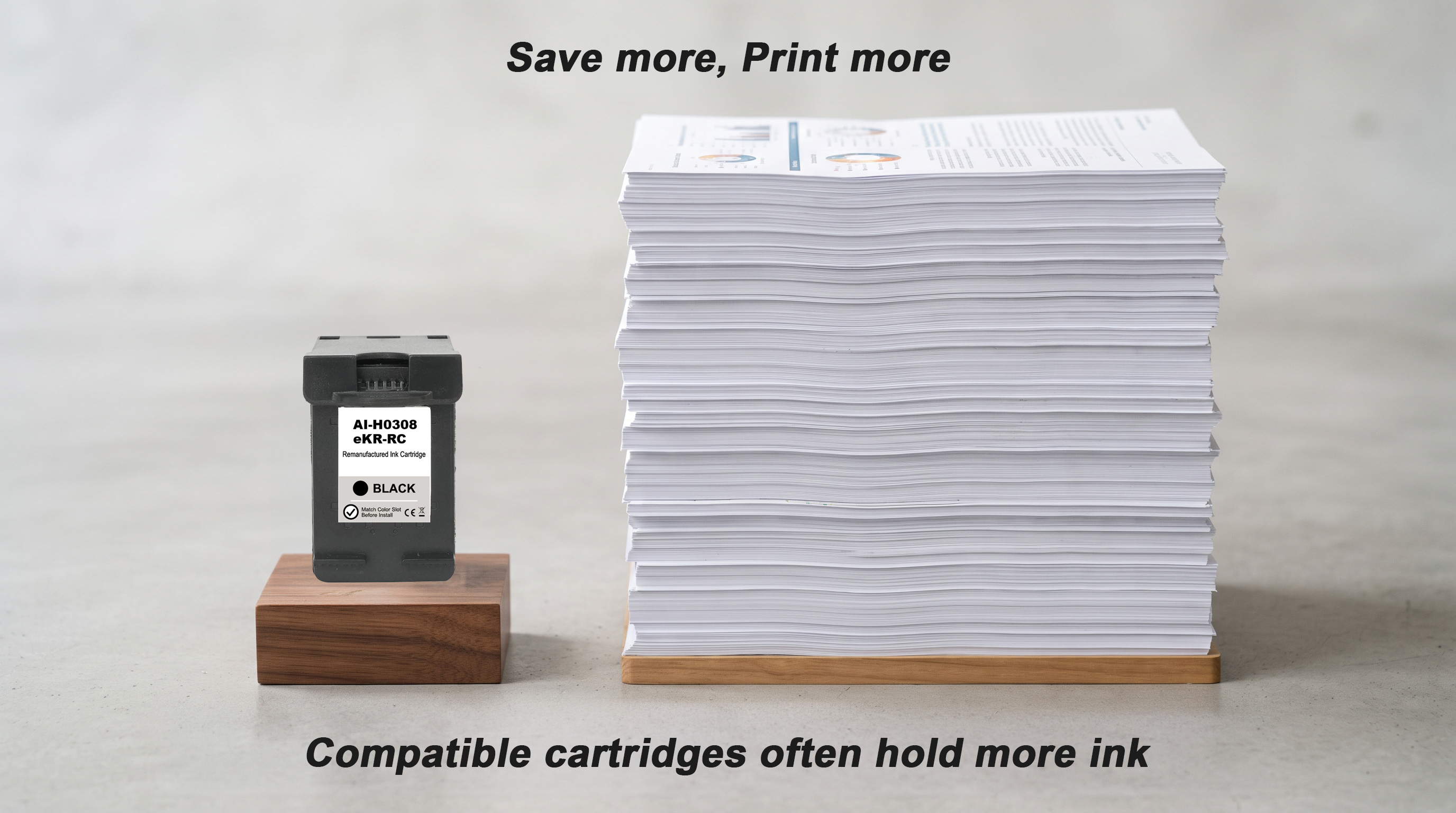
Compatible ink isn't one single product made by one company. There are many different third-party manufacturers, so quality, formulation, cartridge construction and performance can vary.
Independent testing can also produce different results depending on the cartridge and printer being tested. In September 2026, Which? reported that some of the third-party inks it tested performed as well as, or nearly as well as, original inks, while also noting that not all third-party inks were equally good.
This is why it is better to ask:
Who made the compatible cartridge, and how does the supplier stand behind it?
rather than simply asking whether all compatible ink is good or bad.
What About Print Quality?
Original cartridges are developed by the printer manufacturer specifically for its printer systems.
This can be particularly important if you need highly consistent colour reproduction or regularly print photographs and other colour-sensitive material.
Epson, for example, states that its genuine inks are developed and tested for its printers and promotes their consistency and reliability.
Compatible cartridges can also produce good results, particularly for everyday documents and general home printing, but performance can vary between suppliers.
If print quality is especially important to you, consider:
-
The type of documents you print
-
Whether you print photographs
-
Whether accurate colour reproduction is important
-
The reputation of the cartridge supplier
-
The product's specifications and guarantee
For everyday printing such as letters, forms, homework and general documents, the difference may be less important to you than the saving on running costs.
What About Photo Printing?
Photo printing is one area where your choice of ink can matter more.
If you regularly print photographs that need accurate colours, smooth gradients and good long-term appearance, you may prefer original manufacturer ink.
Printer manufacturers develop their inks alongside their printers and paper systems, and Epson specifically highlights the development and testing of its genuine inks.
This doesn't mean that every compatible cartridge will produce poor photographs. It means that you should consider your requirements rather than assuming that the cheapest cartridge will give exactly the same results for every type of printing.
If most of your printing is ordinary documents, the requirements can be very different from those of someone producing professional photographs.
Are Compatible Ink Cartridges Safe to Use?
Compatible cartridges are designed as alternatives to original manufacturer cartridges, but compatibility is important.
Before buying one, check:
-
Your exact printer model
-
The correct cartridge number
-
The compatible printer list
-
Whether the cartridge is standard or XL
-
Whether your printer has any restrictions relating to third-party cartridges
This last point is particularly important for some HP printers.
HP states that certain printers use dynamic security features that can prevent cartridges containing non-HP chips from working. HP also says that cartridges which work today may potentially stop working after firmware changes on affected printers.
This does not mean that all HP printers reject compatible cartridges.
It means you should check the specific printer model before buying.
What About Printer Warranties?
Warranty questions are another reason people hesitate before trying compatible ink.
The position can depend on the manufacturer, printer model and the nature of the problem.
For example, HP's published warranty information states that using a non-HP or refilled cartridge does not, by itself, affect the HP Limited Warranty for the printer. However, HP also states that if printer or printhead damage is attributable to the use of a non-HP cartridge, the resulting repair or damage may not be covered by that warranty.
This distinction is important.
It is different from saying that simply installing a compatible cartridge automatically cancels a printer warranty.
If you have a newer or expensive printer, check the manufacturer's specific warranty and consumable information before switching.
Compatible vs Remanufactured: Are They the Same?
No.
The terms compatible and remanufactured are sometimes used interchangeably, but they describe different types of products.
Compatible cartridges
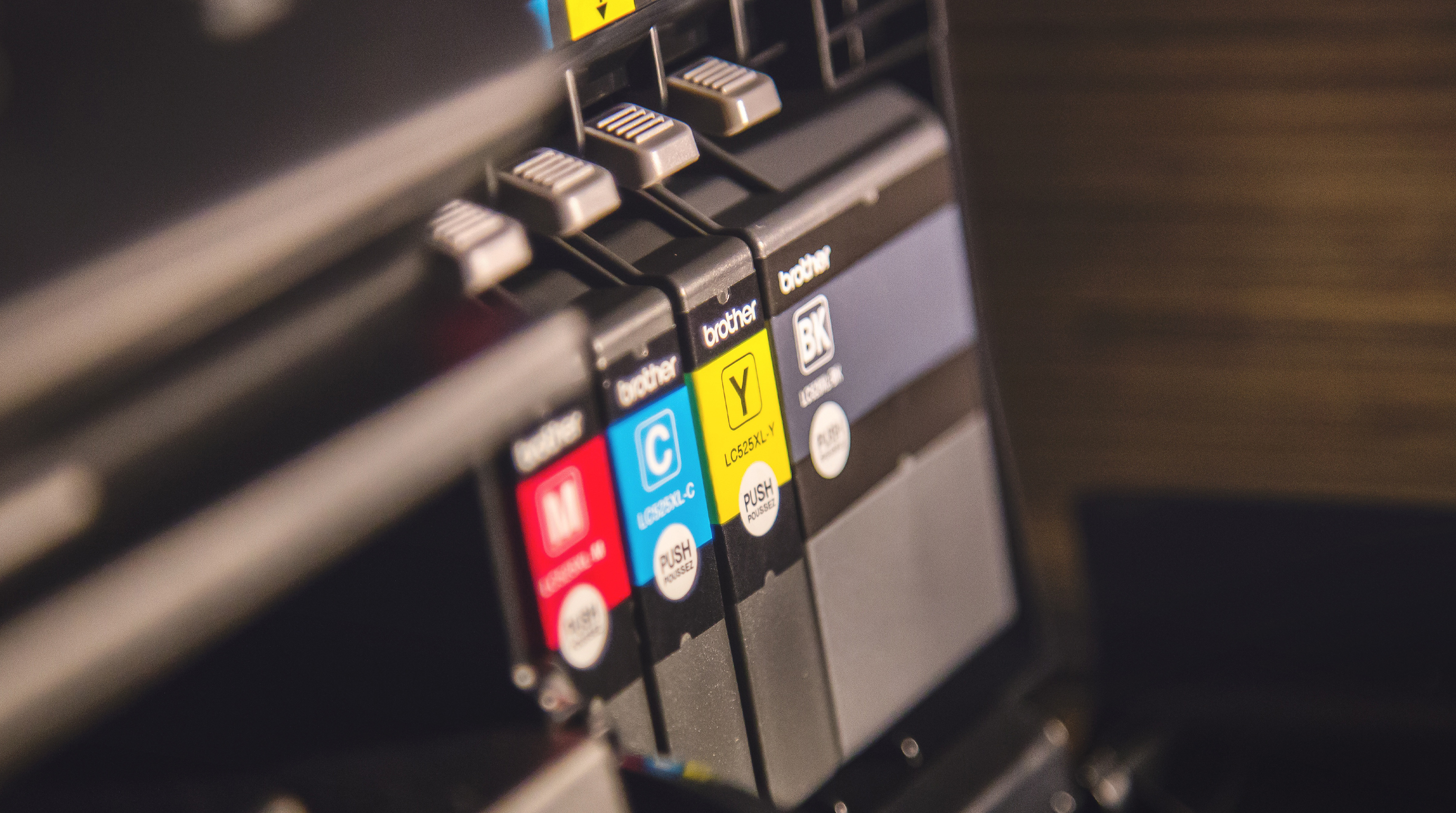
A compatible cartridge is generally a new third-party cartridge designed to work with a particular printer.
Remanufactured cartridges
A remanufactured cartridge typically starts with a previously used cartridge, which is then cleaned, refilled, tested and prepared for reuse.
This distinction matters because the construction and production process can be different.
If you are buying a cartridge, check the product description carefully so you know whether you are buying:
-
Original
-
Compatible
-
Remanufactured
-
Refilled
These terms should not be treated as interchangeable.
Compatible vs Counterfeit: What's the Difference?
A compatible cartridge is a legitimate third-party replacement designed for a specified printer.
A counterfeit cartridge is different: it is intended to imitate or falsely represent an original branded product.
A compatible cartridge should be clearly labelled as compatible or non-OEM rather than being presented as an original manufacturer cartridge.
This is one reason it is important to buy from a retailer that clearly identifies what it is selling.
Look for:
-
Clear product descriptions
-
The exact cartridge reference
-
Compatible printer models
-
Clear identification of the cartridge as compatible
-
A retailer you can contact if there is a problem
What Are the Advantages of Original Ink?
Original ink can make sense if your priorities include:
Manufacturer-designed compatibility
The cartridge is made for the manufacturer's printer system.
Predictable print performance
The manufacturer controls the ink and cartridge design used with its printers.
Photo and colour printing
If colour consistency is particularly important, you may prefer the manufacturer's own ink.
Manufacturer support
If you experience a problem, using the manufacturer's own consumables can make it easier to establish whether the cartridge is involved.
Simplicity
Some customers simply prefer to use the cartridge supplied by the printer manufacturer and don't want to compare alternatives.
The main trade-off is usually the higher purchase price.
What Are the Advantages of Compatible Ink?
Compatible cartridges can make sense if your priority is reducing printing costs.
Lower purchase price
Compatible cartridges are generally sold as a lower-cost alternative to original cartridges.
Lower running costs
If the cartridge provides a good page yield at a lower price, your cost per page can be reduced.
More choice
You can compare different compatible cartridge suppliers rather than being limited to the manufacturer's own consumables.
Useful for everyday printing
Compatible ink can be particularly attractive for routine home printing, schoolwork, letters and general documents where the lowest possible cartridge cost is important.
The key is to choose the correct cartridge from a reputable supplier rather than simply choosing the cheapest product available.
Which Should You Choose?
There isn't one answer that applies to every printer owner.
Instead, consider what you actually need from your printer.
Original ink may suit you if:
-
You regularly print photographs
-
Accurate and consistent colour is particularly important
-
You want to stay with the manufacturer's consumables
-
Your printer has restrictions affecting third-party cartridges
-
You prioritise manufacturer support over the lowest running cost
Compatible ink may suit you if:
-
You print a lot of everyday documents
-
You want to reduce your printing costs
-
Your printer is confirmed compatible
-
You are happy to use a third-party cartridge
-
You choose a reputable supplier
-
Cost per page is an important consideration
The decision doesn't have to be based on price alone.
Think about what you print, how often you print and how important consistency is to you.
How to Choose a Good Compatible Ink Cartridge
If you decide to try compatible ink, there are several things worth checking before you order.
1. Check the exact printer model
Don't rely on the brand alone.
A compatible cartridge for one Canon, Epson, Brother or HP printer may not work in another.
2. Check the cartridge number
Find the cartridge reference required by your printer.
For example, this could be an Epson 603XL, Brother LC421 or Canon PGI-550.
3. Check the compatibility list
Make sure your exact printer model appears in the product's compatibility information.
4. Check the cartridge type
Make sure you know whether you are buying a compatible, remanufactured or original cartridge.
5. Check standard vs XL
If both are available, compare their price and estimated page yield.
6. Check the supplier
Look for a retailer that clearly identifies its products and provides customer support if something goes wrong.
This can be just as important as the cartridge itself.
What About Compatible Ink for Brother, Canon, Epson and HP?
Go Inks specialises in compatible printer consumables for some of the UK's most popular printer brands, including Brother, Canon, Epson and HP. The current Go Inks range allows customers to browse ink cartridges by printer brand and ink series, or search for a printer model or cartridge number.
This means you can start with the information you already have:
Printer model → cartridge number → compatibility → cartridge type → price
For example, if you know that your Canon printer uses PGI-550 and CLI-551 cartridges, you can look for compatible replacements for those specific cartridge references rather than simply searching for generic Canon ink.
The same approach applies to Brother, Epson and HP cartridges.
Are Compatible Ink Cartridges Worth Considering?
If your main priority is reducing the cost of everyday printing, compatible cartridges are worth considering.
But the word compatible shouldn't be treated as a guarantee of identical performance across every supplier.
The quality of third-party cartridges varies, and some printer models have manufacturer-specific restrictions that you need to check.
The best approach is to compare the actual product rather than making a decision based only on the words "original" or "compatible".
Check the cartridge number, printer compatibility, page yield, price and supplier.
That gives you a much better basis for deciding which cartridge fits your own printing needs.
A Simple Original vs Compatible Checklist
Before buying your next cartridge, ask yourself:
What do I print?
Everyday documents, schoolwork and forms have different requirements from professional photographs.
How much do I print?
If you print regularly, cost per page can become more important.
Does my printer support the cartridge?
Check the exact printer model and cartridge number.
Is there an XL option?
Compare price and estimated page yield.
Is the cartridge clearly identified?
Make sure you know whether it is original, compatible or remanufactured.
Who am I buying from?
Choose a supplier that clearly explains compatibility and can help if there is a problem.
Find Compatible Ink Cartridges at Go Inks
Go Inks supplies compatible ink cartridges for a wide range of Brother, Canon, Epson and HP printers.
You can browse the range by printer brand and ink series or search for your printer model or cartridge number.
The range includes individual cartridges and multipacks, giving you options depending on how often you print and what your printer requires.
If you're looking for a lower-cost alternative to original printer ink, the most important thing is to start with the correct cartridge reference and confirm compatibility with your printer before ordering.
Frequently Asked Questions
Are compatible ink cartridges the same as original cartridges?
No. Original cartridges are made by the printer manufacturer, while compatible cartridges are made by third-party manufacturers and designed to work with specific printer models.
Are compatible ink cartridges cheaper than original cartridges?
Compatible cartridges are generally sold at a lower price than equivalent original manufacturer cartridges. However, compare page yield as well as the purchase price to get a better idea of the potential running cost.
Are compatible ink cartridges safe to use?
Compatible cartridges are designed as alternatives to original cartridges, but compatibility depends on the printer and cartridge. Some printer models, particularly certain HP models, have restrictions that can affect third-party cartridges. Always check your exact printer before ordering.
Will compatible ink damage my printer?
There is no single answer for every compatible cartridge or printer. Cartridge quality varies between suppliers, and manufacturers may have specific restrictions or warnings. If a printer problem is specifically attributable to a cartridge, warranty coverage can also depend on the manufacturer's terms.
Will compatible ink void my printer warranty?
Do not assume that using a compatible cartridge automatically voids your warranty. The exact terms depend on the manufacturer and printer. HP, for example, states that use of a non-HP cartridge does not itself affect its printer warranty, although damage attributable to such a cartridge may not be covered.
Are compatible cartridges as good as original cartridges?
Performance varies. Some third-party cartridges can provide very good results, while others may not perform as well. Independent testing has found that some third-party inks can perform similarly to originals, but quality is not consistent across every compatible product.
What's the difference between compatible and remanufactured ink?
A compatible cartridge is generally a new cartridge manufactured by a third party for a specific printer. A remanufactured cartridge generally starts as a previously used cartridge that has been cleaned, refilled and tested for reuse.
What is an OEM ink cartridge?
OEM stands for Original Equipment Manufacturer. In printer ink, an OEM cartridge generally refers to a cartridge supplied by the printer manufacturer, such as Canon, Epson, Brother or HP.
Can I use compatible ink in an HP printer?
Some HP printers work with compatible cartridges, while certain models have cartridge restrictions such as dynamic security. HP states that some printers can block cartridges using non-HP chips, so you should check the specific HP printer model before buying.
Is original ink better for photographs?
Original manufacturer ink can be a sensible option when colour consistency and photo printing are particularly important. Printer manufacturers develop their inks alongside their printer systems, although the actual difference can depend on the printer, ink, paper and type of photograph being printed.